

This sounds like me in soooo many ways. Maybe this is why my mom gave me the nickname “Essie” which the devil hates. People always called me Esther for some reason when I told them “Essie” . A Deborah can be “Debbie” Susan can be “Susie,” but it was just somehow impossible for me to be an “Essie.” I’ve been angered, upset, not taken seriously, misused and abused, but I am like a Timex, I take a licking and keep on ticking. I am Me. Be yourself folks. This lady’s life sounds like mine….and STILL I rise. (Covered by the Blood.)
Subscribe!

African American History
Sropoedstn05a1fPf1 9y163a6u gl8r r1u24Mae185f0u 077lcb:15tFa5 ·
They were singing hymns.
The coffin was closed.
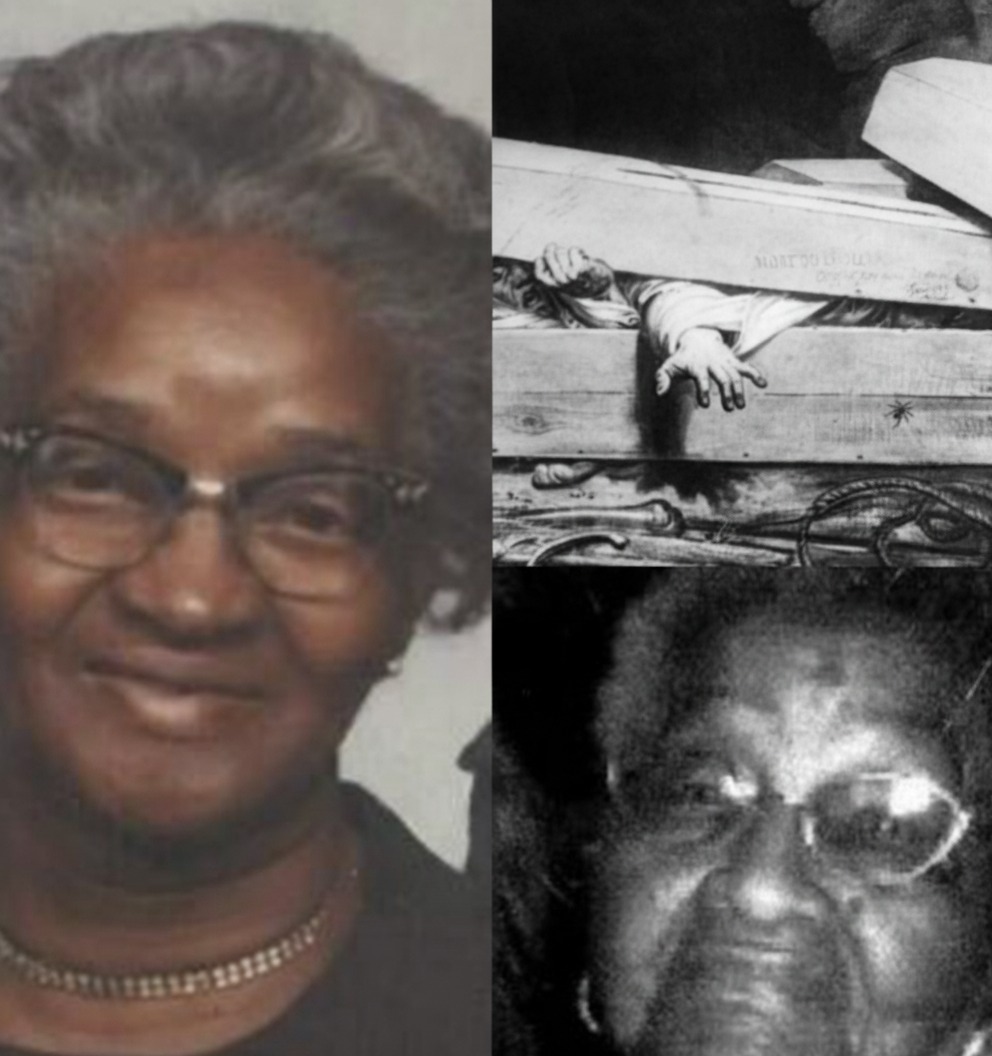
Then the “dead” woman sat up—and the funeral became a scream.
South Carolina.
This is not folklore.
This is not a ghost story.
This is Black history—raw, human, and unsettling.
PRONOUNCED DEAD IN A WORLD THAT DIDN’T LOOK TWICE
Essie Dunbar was a young Black woman living in the Jim Crow South, a time when Black lives were handled with speed, assumption, and neglect—especially in medicine.
She became seriously ill. We don’t know exactly with what. What we do know is that doctors examined her, made a decision, and declared her dead.
No advanced testing.
No second opinions.
No urgency to be absolutely certain.
Because in 1915 America, Black patients were rarely afforded careful attention, let alone doubt.
Her family was told she was gone.
And they believed it.
THE FUNERAL THAT SHOULD HAVE ENDED HER STORY
Death moved fast.
A coffin was ordered.
A funeral was scheduled.
Friends and family gathered, dressed in black, preparing to let her go.
They mourned her.
They cried.
They prayed.
The service ended.
The coffin was closed.
Essie Dunbar was being buried alive.
THE SISTER WHO REFUSED TO ACCEPT “TOO LATE”
One person hadn’t arrived in time—Essie’s sister.
When she reached the church and learned the funeral had already taken place, she refused to accept it.
She demanded one last look.
One final goodbye.
The coffin was opened.
AND THEN HISTORY BROKE OPEN
Essie Dunbar moved.
She sat up.
She looked around the room—confused, alive, breathing.
Pandemonium erupted.
People screamed.
Some fainted.
Others ran from the church in terror.
What had been a funeral turned into chaos.
The woman they believed was dead was very much alive.
Essie had not died at all.
She had been in a deep coma—misdiagnosed, misunderstood, nearly buried because no one took the time to be sure.
WHAT HAPPENED NEXT—AND WHAT IT MEANT
Essie was rushed home and slowly recovered. She went on to live for many more years.
But her life was never the same.
Wherever she went, the story followed her.
Some whispered “miracle.”
Others whispered “curse.”
Many didn’t know what to believe.
But the truth is simpler—and more disturbing.
THE PART HISTORY DOESN’T SOFTEN
Essie Dunbar’s story is shocking not because she “came back to life.”
It’s shocking because she never died.
She was nearly buried alive because:
Medical care for Black Americans was deeply unequal
Black bodies were not handled with the same caution
Errors that would have triggered investigation for white patients were accepted as final for Black ones
This wasn’t supernatural.
It was systemic negligence.
Her survival exposes how easily Black lives were—and still can be—misjudged, dismissed, and endangered.
WHY ESSIE DUNBAR STILL MATTERS
Essie Dunbar survived her own funeral.
But her story survived because it forces us to confront uncomfortable truths:
That Black life has often been treated as disposable
That “mistakes” in unequal systems cost real lives
That survival itself can be an act of resistance
Her story lives on not as a curiosity—but as a warning.
SHE WAS PRONOUNCED DEAD.
SHE WAS MOURNED.
SHE WAS ALMOST BURIED.
And then she opened her eyes.
Essie Dunbar didn’t rise from the dead.
She rose from being unseen.
And more than a century later, her story still asks us the same question:
How many lives were lost because no one bothered to look twice?
Blessings!